We started by conducting a wayfinding audit. This involved a number of stakeholder engagement activities, including workshops and one-to-one interviews with local businesses alongside digital surveys with local people across the town. We also completed a number of surveys to improve our understanding of the current routes available for pedestrians, cyclists and buses around Wimborne.
With the audit completed, we started work on formulating the wayfinding strategy. We investigated the existing signage Wimborne had in place, and noted that there were a number of heritage signs, as well as several traditional cast iron finger posts and plaques. We also discovered that there was an industrial estate, around a twenty-minute walk away from the town centre but nonetheless within the remit of the town’s boundaries.
Wimborne’s business improvement district wanted the wayfinding strategy to extend across both the town and industrial estate. It was important to us that no matter where you go in Wimborne navigation would stay clear and consistent. We had to ensure the signage we designed for this project fit firmly within best practice for wayfinding, but still stayed characteristic for the town.
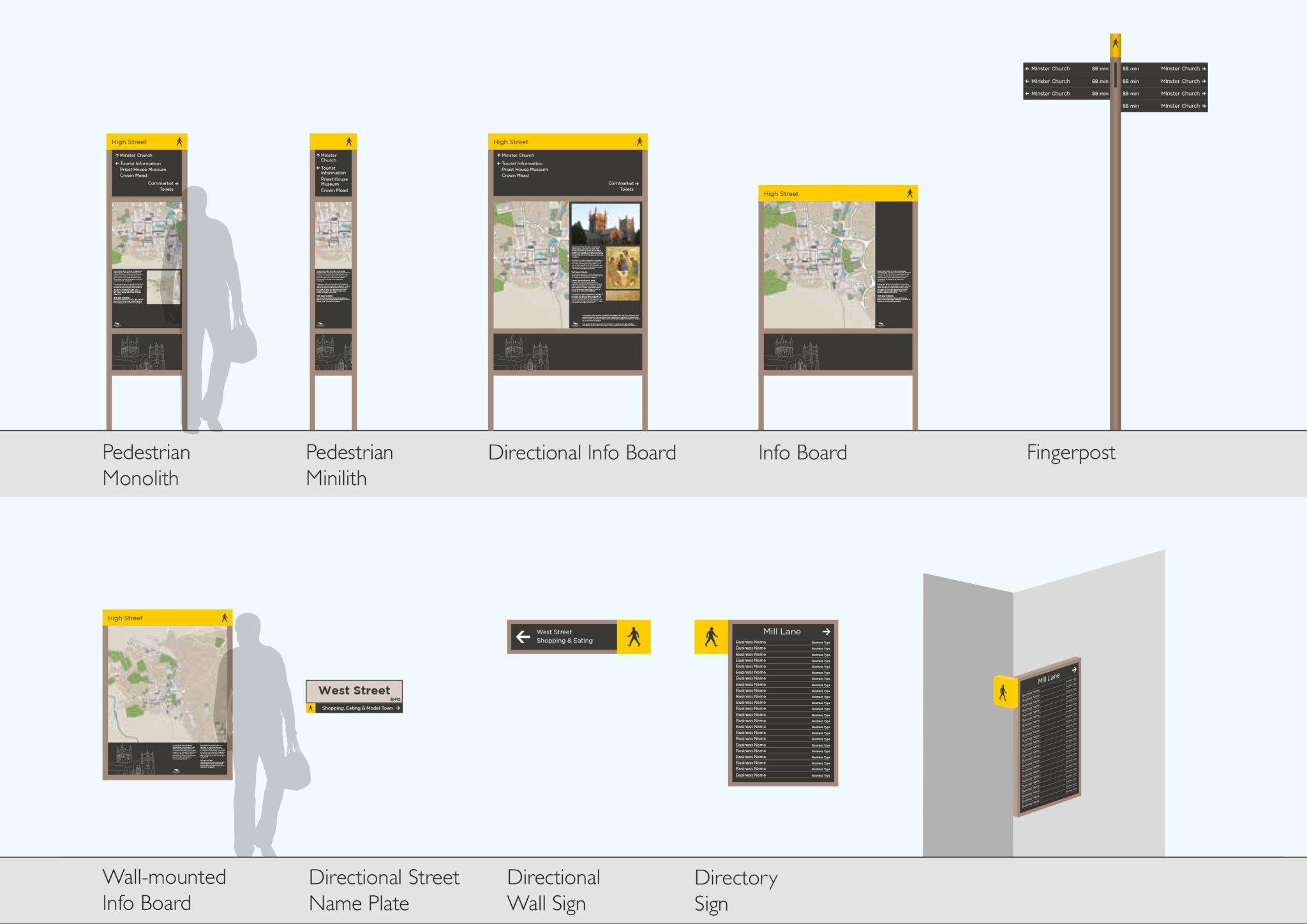
Since it’s historic, Wimborne featured lots of stone work and traditional signage types. When it came to designing a new signage family, then, we sought to ensure continuity with this culture and history throughout. In this process, we had to liaise with English Heritage as well as the council’s conservation and planning teams to ensure that none of the signs’ locations or designs would distract from the town’s appearance.
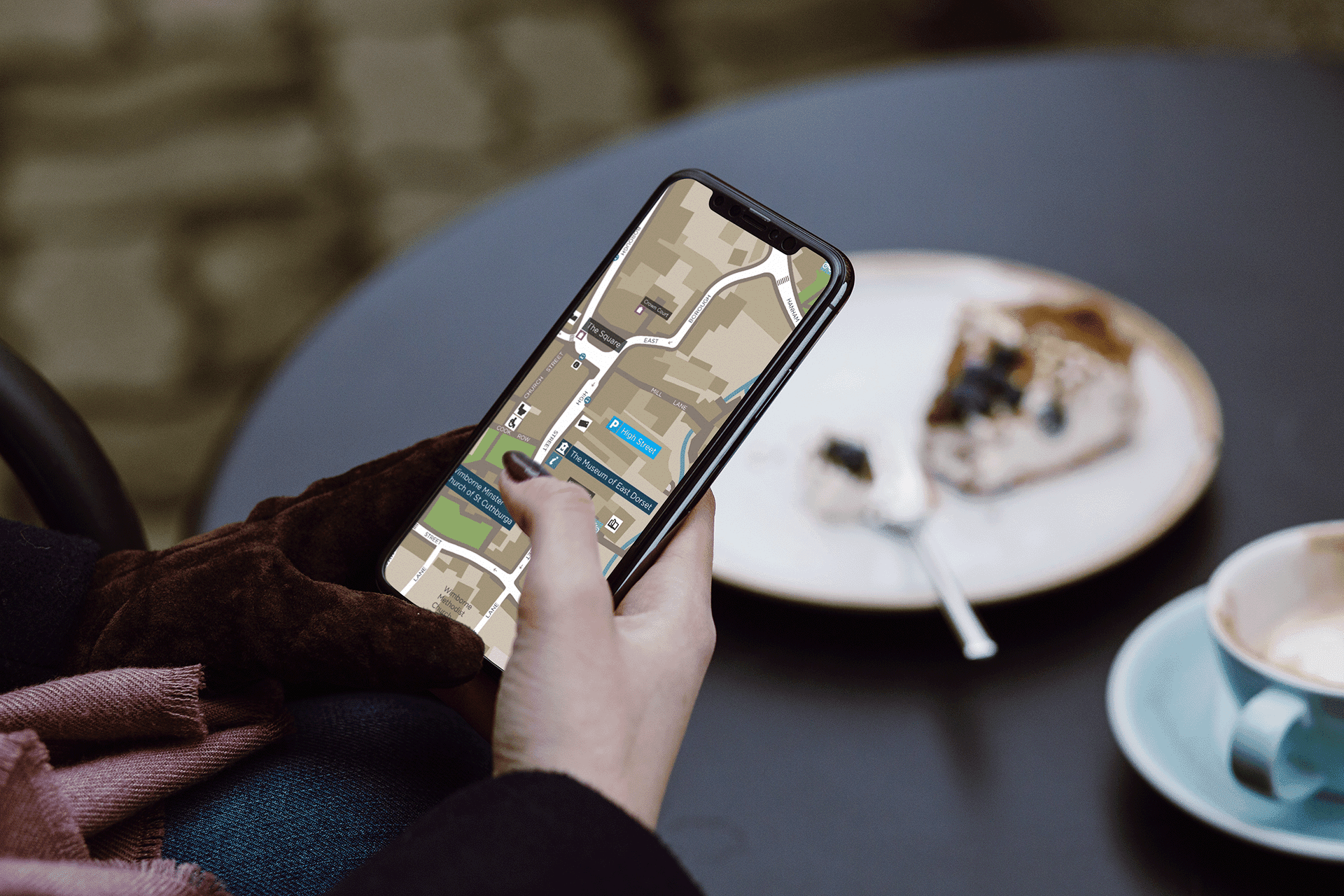
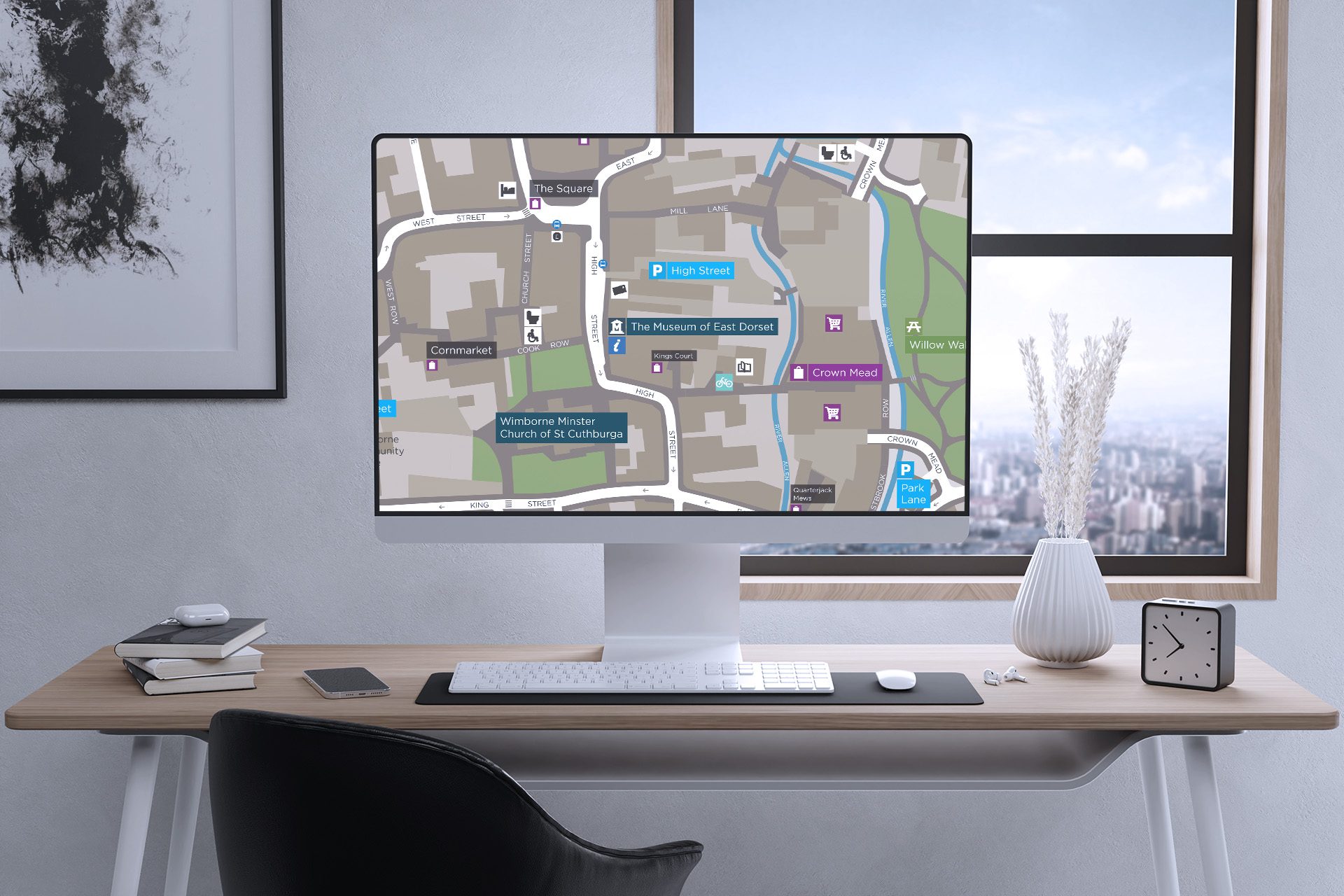
One thing we could accomplish though, is declutter much of the legacy signage and incorporate it into the new wayfinding system to ensure it stays effective and seamless. The next step was the creation of a wayfinding map that identified key points of interest, historical or otherwise. We designed it to be flexible, so it could be used for tourists, or to navigate the night or day economies. It could likewise be adapted not just to the signage family, but also to various other wayfinding aids in print or digital formats.