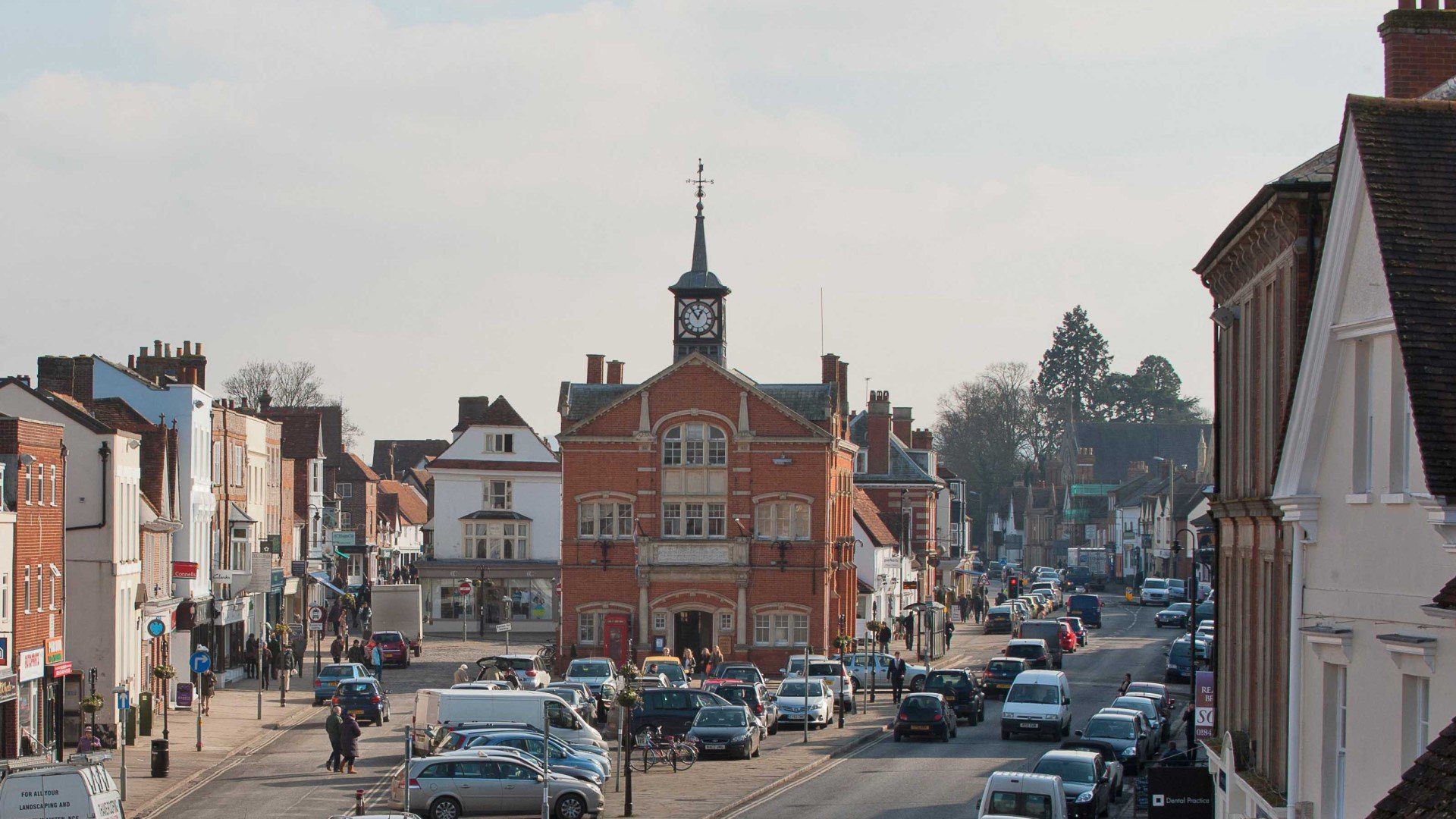
Thame receives a range of visitors, and it was important that the wayfinding journey would be effective for both newcomers and repeat guests.
We began with an audit, carrying out a number of stakeholder engagement activities, including workshops, face-to-face meetings and digital surveys. This was integral to forming an in-depth understanding of the various different users and the needs and challenges that would arise from creating a holistic wayfinding strategy to account for them.
The strategy needed to work together as one to solve potential navigation challenges, which would be more difficult to achieve if we only focused on one demographic or need at a time.
From here, we began journey mapping. We soon identified that the nearest train station was located outside of the town centre and is not easily walkable in a short amount of time. This distance was an important element to be accounted for in creating and implementing the wayfinding system.
We also understood that there were already various developments planned and in construction for Thame, which gave us insight into how it will continue to grow into the future. We took the trajectory of these expansions and used them to ensure the wayfinding strategy would grow with them.
Thame stakeholders were enthusiastic about emphasising the cultural and historic output of the town throughout the wayfinding system. To accomplish this, we identified various opportunities where sculpture could be used to bolster the aesthetic of the area and collaborated with a number of local artists to implement it.